Signal & Power Integrity — an LTspice Investigation
A hands-on SPICE study of the things that quietly wreck a real board: parasitics on a DC measurement, RC-filter bandwidth vs. noise, clock-to-amplifier crosstalk, decoupling for power integrity, and — measured with FFT and THD — how a grounding strategy shows up in the spectrum.
The premise: a circuit that's right on paper can still fail
A schematic can be perfectly correct and the board still misbehave, because the schematic hides the physics — trace resistance, stray capacitance, shared return paths, supply sag under load. This project is a set of focused SPICE experiments that make each of those effects visible and, where possible, put a number on it.
Parasitics on a DC measurement
The first experiments modelled how parasitic resistance corrupts a DC sense measurement — the millivolts lost in trace and connector resistance between where a voltage is and where you measure it — and why a force/sense (Kelvin) connection fixes it by separating the current-carrying path from the high-impedance sensing path so no measurement current flows through the parasitic drop.
RC filtering — the bandwidth vs. noise trade
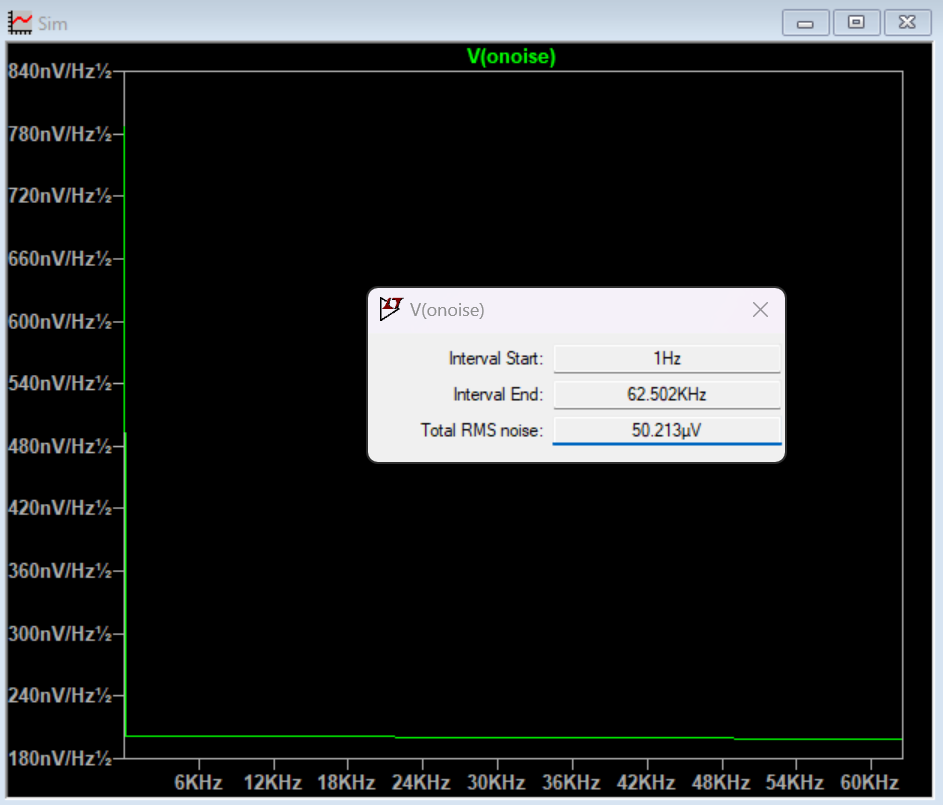
A first-order RC low-pass is the workhorse of analog conditioning, and the experiments made its central trade concrete: pushing the cutoff down rejects more noise but slows the response, and the choice of R and C also sets how much thermal noise the filter itself contributes. It's the same reasoning behind an anti-aliasing filter ahead of an ADC.
Grounding, measured in the spectrum with FFT & THD
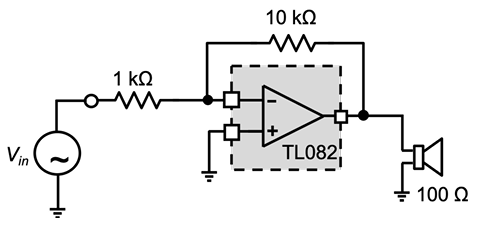
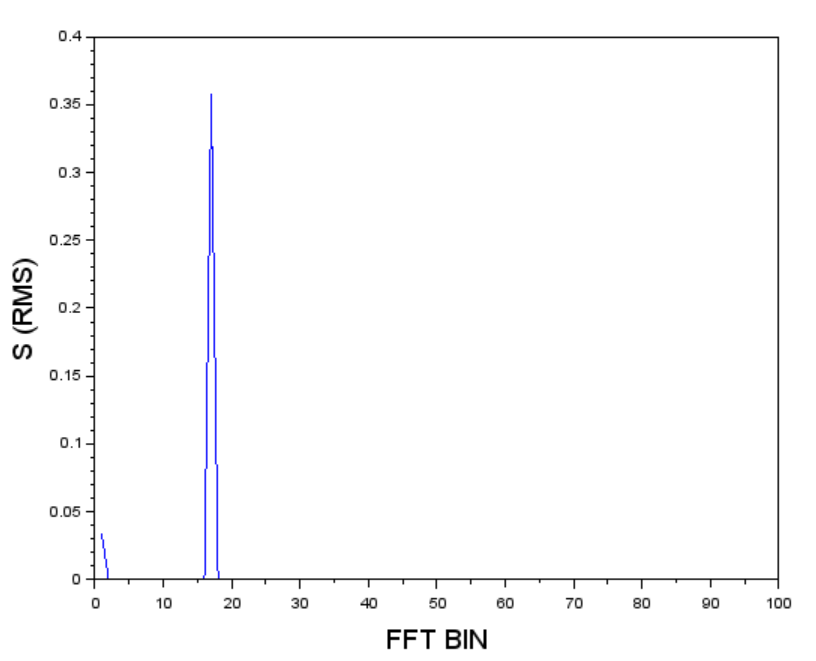
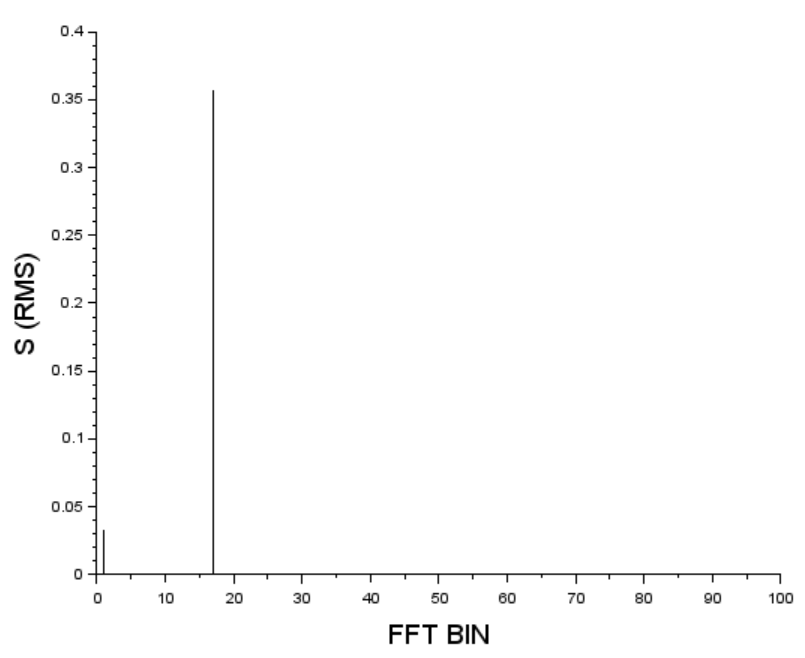
This is the part I find most useful, because it turns an argument people usually have with hand-waving — "star ground or daisy-chain?" — into a measurement. I built the circuit both ways and used an FFT of the output to compare them, reading total harmonic distortion (THD) and the noise floor straight off the spectrum.
Decoupling & power integrity
On the power side, the experiments looked at decoupling-capacitor placement — the local charge reservoir that supplies a chip's fast transient current so the demand doesn't have to travel back through the inductance of the power plane and show up as supply droop (and, ultimately, as noise on every signal referenced to that rail). Good decoupling is power integrity's front line.
What I took away from it
- Turning integrity questions into measurements — FFT and THD to score a grounding choice instead of arguing it.
- Force/sense (Kelvin) sensing, and why parasitic resistance quietly biases DC measurements.
- The RC bandwidth-vs-noise trade, and reading a noise floor apart from distortion.
- Decoupling as the local answer to transient current demand — the core of power integrity.
- Comfort moving between time and frequency domains (transient ↔ FFT) to explain what a board is really doing.